



Google Pay Now Available in the Philippines:
What You Need to Know
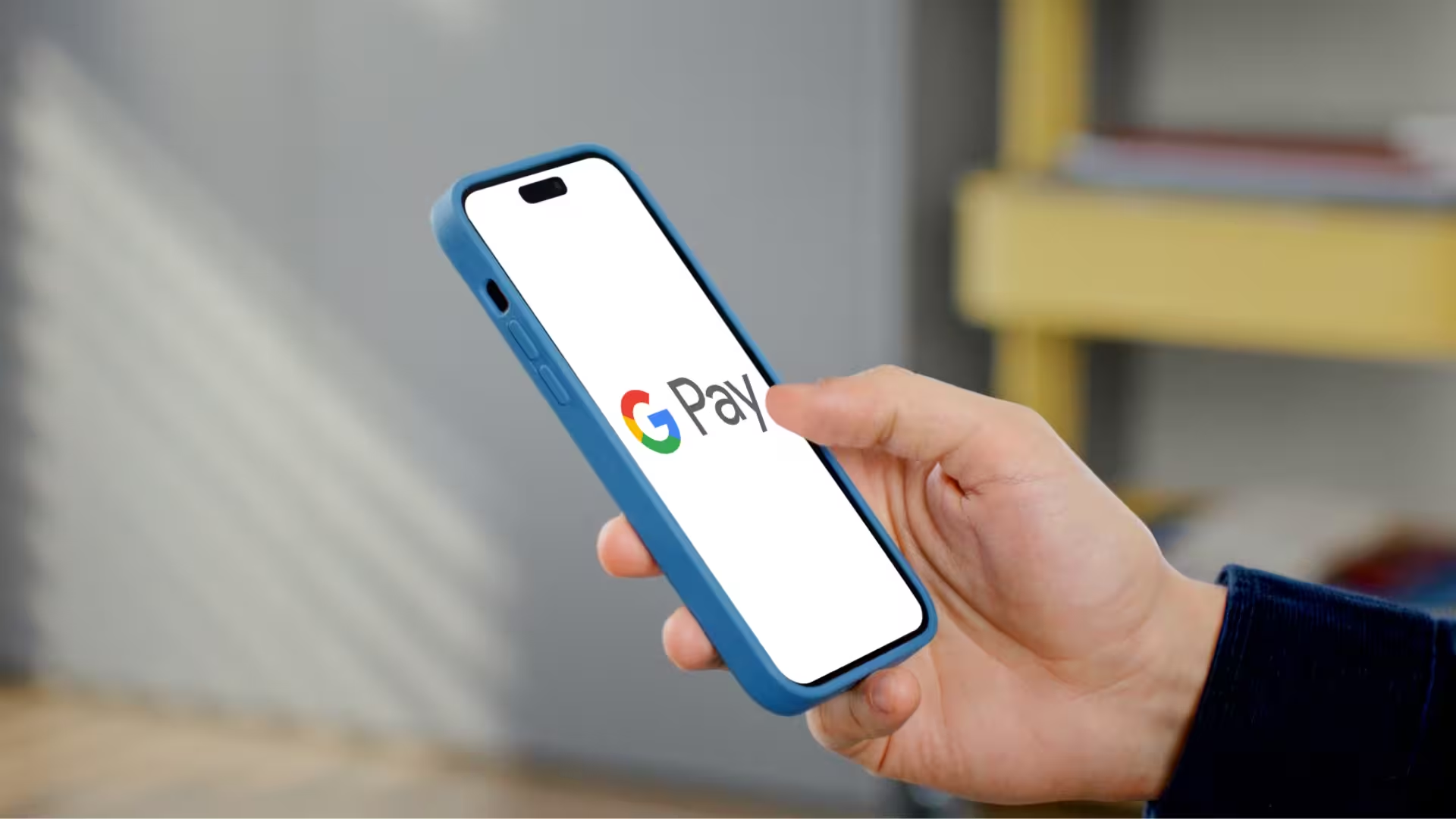
The arrival of major global payment platforms signifies a massive step in the Philippines’ journey toward a digital economy. The anticipation around the entry and use of Google Pay in the Philippines has been framed by a critical policy clarification from the Bangko Sentral ng Pilipinas (BSP), which has opened the door for the platform’s debut in the local payments ecosystem.
This is monumental news for Filipino consumers and businesses alike, as the integration of such a global service complements local innovations and helps drive the Philippines closer to its goal of a cash-lite, inclusive, and future-ready digital economy. The foundation for this digital shift is strong, given that the country’s smartphone penetration rate reached 73.7 percent in 2023 and is projected to climb to 97 percent by 2029.
What’s New with Google Pay?
Google Pay is designed to offer the “Google way to pay,” focusing on speed, security, and convenience. The service functions by securely storing users’ debit and credit card details directly on their smartphones.
Key features introduced to provide a seamless payment experience include:
- Autofill: Users can save their payment details once, and these details will automatically appear at checkout on Android devices and Chrome.
- Tap to pay: This feature allows users to easily tap their phone to pay in physical stores where the familiar symbols for in-store checkout are displayed.
- Buy with Google: This button simplifies the checkout experience with a single click everywhere the “Buy with Google Pay” button is visible.
This functionality adheres to global digital payment trends that prioritize security. It keeps transactions safe through built-in authentication, transaction encryption, and fraud protection. Furthermore, the service maintains transparency, assuring users that it will never sell their personal information or transaction history.
Why Google Pay Matters in the Philippines: The GCash Integration
Google Pay’s entry was hastened by a policy clarification from the Bangko Sentral ng Pilipinas (BSP). The central bank confirmed that it does not classify Google Pay as an operator of payment systems (OPS) because the service merely facilitates transactions and does not hold customer funds like traditional digital wallets. This regulatory clarity paved the way for its integration.
Crucially, Google Pay’s relevance to the millions of Filipino consumers who prefer using mobile wallets is cemented by its partnership with GCash.
- Seamless Fund Source: This integration enables millions of Filipinos to link their GCash wallets to Google Pay for fast, secure, and seamless transactions. Users can easily activate GCash as a fund source for Google Pay for various transactions.
- Enhanced Security: By integrating, users benefit from a more seamless and secure experience that eliminates the need for manual card entry and ensures that card numbers are not stored or shared with merchants.
- Accessibility: The linkage is currently available to select GCash users and is rolling out to more customers soon. Users can link their accounts by downloading the Google Wallet App, navigating to “My Linked Accounts” in the GCash app, and proceeding with verification.
As Ren-Ren Reyes, President and CEO of G-Xchange, Inc. (GCash mobile wallet operator), noted, this integration empowers users to move through digital and physical spaces with greater ease, security, and reach.
Benefits for Business Owners & SMEs
The introduction of powerful digital payment platforms like Google Pay provides essential benefits for business owners and Small and Medium Enterprises (SMEs) adapting to the modern digital landscape.
For businesses, Google Pay facilitates streamlined operations by enabling customers to pay instantly with a tap or a click. This efficiency can lead directly to faster customer payments and thus improved cash flow for the business. By relying on secure mobile transactions, businesses can also benefit from the reduced physical handling of cash, minimizing the associated risks and administrative tasks of manual cash management.
Digital Finance Is Evolving
The regulatory move by the BSP to not classify Google Pay as an OPS, recognizing it as a transaction facilitator, demonstrates how the regulatory environment is actively adapting to modern fintech advancements.
The tools and features offered underscore that the future of finance is inherently mobile, connected, and automated. As the government pushes for cashless payments across key infrastructure, digital payment tools are becoming the core economic engine.
From Smart Payments to Smart Accounting
As digital payments become the norm, businesses are transitioning from paper receipts to a growing volume of real-time digital transactions. Tools like Google Pay streamline how money moves—but they also increase the need for accurate, automated, and organized financial tracking behind the scenes. This shift highlights how smart payment systems work best when paired with smart, digital recordkeeping.
For Philippine businesses embracing cashless and online payments, modern cloud accounting platforms play an important role in helping organize and automate these digital transaction records. Solutions like N3 AI Accounting (formerly QNE AI Cloud Accounting) empower Filipino businesses to streamline e-invoicing and financial tracking by automating compliance, organizing customer data, enabling fast e-invoice sending, and providing complete VAT, WTAX, and BIR reporting tools, ensuring seamless alignment with BIR and CAS requirements without adding extra manual work.
The Takeaway
The acceptance of Google Pay by Philippine regulators marks a significant step toward a fully modern and digital financial ecosystem. This development offers Filipinos faster, safer, and more seamless ways to transact, whether for everyday purchases or business-related payments.
As digital payments continue to evolve, it will play a central role in shaping how individuals and businesses move money. Embracing these innovations allows Filipinos to stay aligned with global digital trends and enjoy a more efficient, convenient, and future-ready financial experience.
Frequently Asked Questions (FAQs)
Yes. Google Pay is now available in the Philippines following the Bangko Sentral ng Pilipinas’ policy clarification that allowed its entry into the local payments ecosystem.
Yes. Selected GCash users can now link their GCash wallet to Google Pay as a fund source. This feature is gradually rolling out to more users.
You can set up Google Pay by downloading the Google Wallet app, adding your debit/credit cards, or linking your GCash account through the “My Linked Accounts” section in the GCash app.
Google Pay can be used in physical stores that support tap-to-pay, on apps and websites with the “Buy with Google Pay” button, and for online checkouts using autofill on Android and Chrome.
Yes. Google Pay uses multiple layers of security, including authentication, transaction encryption, fraud protection, and ensures that your card details are not shared with merchants.