




Is Your Account Software Protecting Your Business or Exposing It?
- Published on
Account software is a digital financial system that records, processes, and monitors business transactions while supporting compliance, reporting, and cash flow visibility. In Malaysia, modern account software must also reduce financial risk, ensure SST alignment, provide real-time reporting, and minimize manual errors.
That definition may sound simple. But the implications are not.
Because in today’s Malaysian business landscape, account software is no longer just a bookkeeping tool. It is a financial control system that directly impacts compliance confidence, operational stability, and decision-making clarity.
What Is Account Software — and Why It Now Functions as Risk Infrastructure?
Traditionally, account software was designed to:
Record transactions
Generate financial reports
Prepare tax submissions
Track receivables and payables
However, modern account software in Malaysia must go beyond these core functions.
Today, effective account software must:
Provide real-time financial visibility
Automate transaction categorization
Support Malaysian SST compliance
Reduce reconciliation delays
Secure financial data in the cloud
When account software performs these roles, it becomes part of business risk management.
Without these capabilities, financial blind spots increase — even if the business appears profitable.
The Hidden Financial Risks Many Malaysian SMEs Overlook
Most SMEs already use some form of account software, and on the surface, everything may seem fine. Invoices are generated, payments are tracked, and tax submissions are filed. But beneath that routine lies a common problem: traditional systems often fail to provide real-time visibility into the company’s financial health. This can result in delayed reconciliations, miscategorized transactions, and fragmented financial data stored in spreadsheets outside the main system.
But usage does not equal protection. Here’s where risk quietly builds:
1. Delayed Reconciliation
Manual reconciliation slows financial visibility. Decisions are made before the numbers are fully accurate.
2. Fragmented Financial Data
Spreadsheets outside the main account software create inconsistencies and version control issues.
3. Reactive Compliance
If your account software does not structurally support SST reporting, compliance becomes stressful and deadline-driven.
4. Limited Real-Time Cash Flow Monitoring
For example, imagine a growing SME that processes hundreds of transactions weekly. The account software generates monthly reports, but the owner needs to make a critical decision mid-month about hiring or inventory purchases. Without real-time insight, they are forced to make choices based on incomplete or outdated data, creating risk that could have been avoided with smarter account software.
Cash flow problems rarely happen overnight. They develop gradually when financial dashboards lack immediacy. These risks are not dramatic. They are subtle. But subtle risk compounds over time.
Why Malaysian Businesses Need Risk-Ready Account Software
Malaysia’s regulatory and digital landscape is evolving rapidly.
Businesses are scaling faster.
Transactions are increasing.
Compliance expectations are tightening.
In this environment, account software must evolve from a record-keeping system into a financial intelligence system.
Risk-ready account software should provide:
Continuous transaction monitoring
Real-time reporting dashboards
Automated reconciliation workflows
Secure cloud accessibility
Structured SST alignment
The goal is not complexity. The goal is clarity. Because clarity reduces risk.
How Modern AI-Powered Account Software Reduces Financial Exposure
Today, account software must do more than record transactions—it must function as a business risk management system. Modern systems are designed to automate repetitive tasks like bank reconciliation, and provide dashboards that show cash flow and financial health in real time. In Malaysia, this also includes aligning with SST compliance requirements, reducing errors, and providing confidence during audits.
By providing these capabilities, account software transforms from a passive recording tool into an active safeguard. It gives accountants and SME owners the ability to make decisions with confidence, reduce financial blind spots, and focus on strategic growth rather than chasing errors.
Where N3 AI Accounting Strengthens Financial Control
With N3 AI Accounting (formerly QNE AI Cloud Accounting), Malaysian SMEs gain more than just automation—they gain control. The platform reduces repetitive tasks, provides intelligent categorization of transactions, ensures SST compliance, and delivers real-time visibility into cash flow and financial performance. Accountants can spend less time correcting errors and more time providing strategic guidance, while business owners can make decisions confidently without worrying about unseen risks.
N3 AI Accounting (formerly QNE AI Cloud Accounting) approach integrates:
- AI-assisted transaction processing
- Real-time financial dashboards
- SST-aligned structures
- E-invoice Ready
- Cloud-based security
- Reduced manual dependency
Instead of functioning as passive bookkeeping software, it supports proactive financial monitoring. For accountants, this means fewer repetitive corrections and stronger advisory capacity. For SME owners, it means greater visibility before making operational decisions.
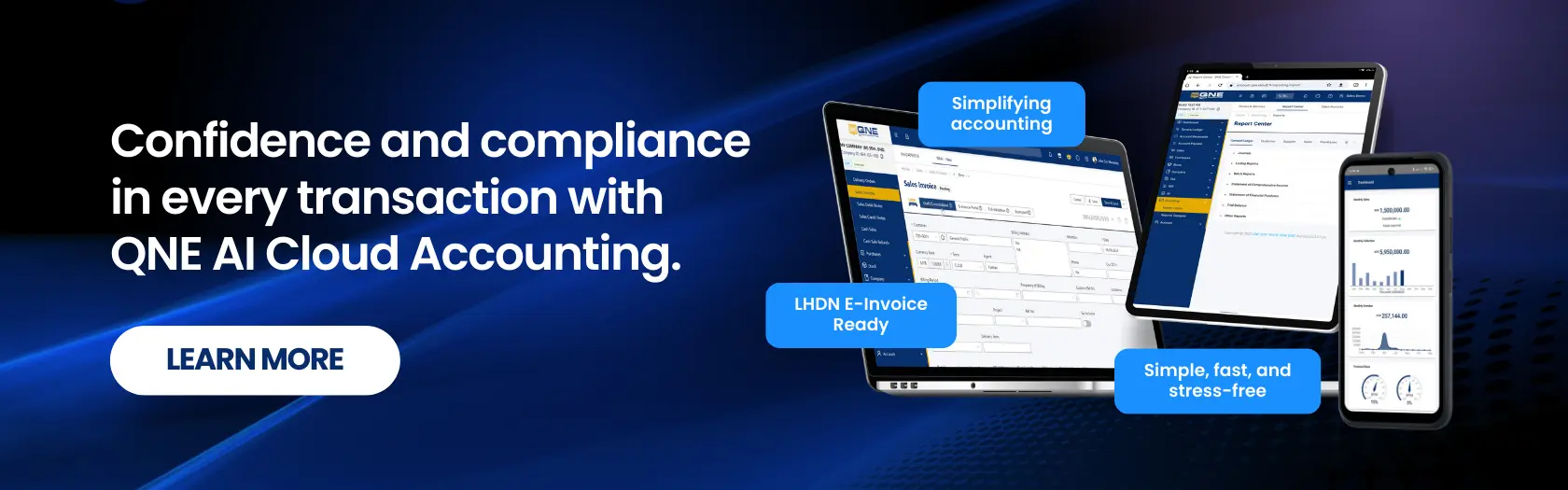
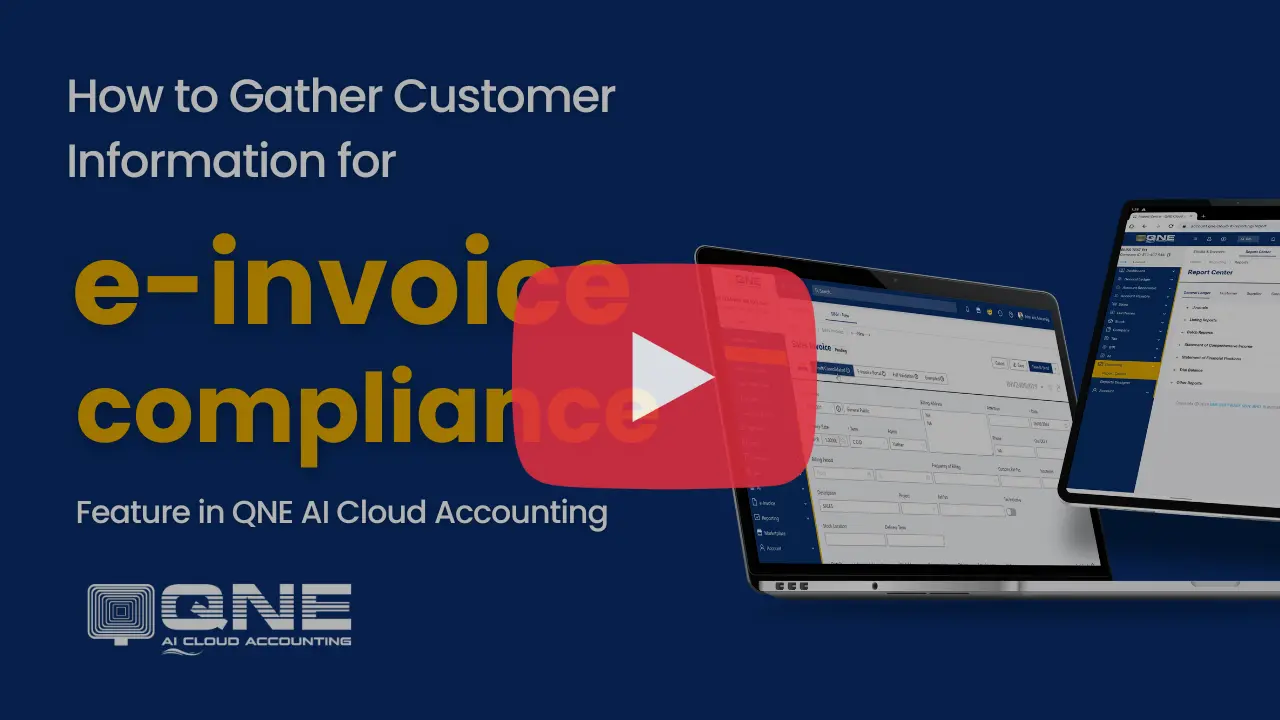
N3 AI Accounting (formerly QNE AI Cloud Accounting) helps Malaysian SMEs prepare for e-Invoice compliance by structuring transaction data, maintaining accurate digital records, and supporting SST-aligned invoice documentation. As businesses align with the e-Invoice framework introduced by the Inland Revenue Board of Malaysia (LHDN), N3 AI Accounting ensures invoices are organized, traceable, and audit-ready—reducing manual errors while improving real-time financial visibility.
Your Account Software Is More Than a Tool
Account software is no longer just about recording past transactions. In Malaysia, it has become a critical part of risk management, compliance, and decision-making infrastructure. The right account software reduces financial blind spots, strengthens operational control, and supports smarter, more strategic business decisions.
For Malaysian SMEs and accounting professionals seeking clarity, compliance confidence, and operational efficiency, N3 AI Accounting (formerly QNE AI Cloud Accounting) represents a trusted solution—transforming accounting from a reactive process into a proactive system of financial stability.
If you want to stop guessing and start making decisions with full financial confidence, explore how N3 AI Accounting (formerly QNE AI Cloud Accounting) can help your business. Reduce hidden risks, improve SST LHDN compliance, and gain real-time visibility into your cash flow—all through trusted Malaysian account software built for SMEs.
Start strengthening your financial control today.
Frequently Asked Questions (FAQs)
What features are essential in cloud accounting software for startups?
Modern account software must go beyond basic bookkeeping. Essential features include real-time financial dashboards, automated transaction categorization, secure cloud storage, SST-aligned structures, continuous transaction monitoring, and automated reconciliation workflows. These capabilities help startups reduce financial blind spots and make informed decisions.
Which accounting software supports SST compliance?
Account software that aligns with Malaysia’s SST requirements ensures smoother tax reporting and compliance. N3 AI Accounting (formerly QNE AI Cloud Accounting) is designed with structured SST alignment, reducing manual errors and helping SMEs stay compliant effortlessly.
How to switch from manual bookkeeping to accounting software?
Transitioning involves moving fragmented spreadsheets into a unified system, adopting cloud-based software, and leveraging features like automated categorization, bank reconciliation, and real-time reporting. Modern AI-powered systems, like N3 AI Accounting, minimize manual dependency and provide visibility for proactive financial decisions.
What features make account software a financial risk management tool?
Beyond recording transactions, risk-ready software detects anomalies, provides real-time cash flow insights, automates reconciliation, secures data in the cloud, and supports compliance reporting. These features transform the software from a passive tool into a proactive safeguard against financial errors and operational risks.
Best accounting software for small businesses in Malaysia?
For Malaysian SMEs seeking clarity, compliance confidence, and operational efficiency, N3 AI Accounting stands out. It combines AI-assisted transaction processing, real-time dashboards, SST compliance support, and cloud security—helping businesses reduce errors, improve reporting, and make strategic decisions with confidence.