










N3 AI Accounting vs Traditional Accounting:
A Smarter Approach to Everyday Accounting

Traditional accounting relies on proven processes and human expertise, while N3 AI Accounting brings automation to everyday accounting work. Compare both approaches to find the one that best fits your business needs.

N3 AI Accounting vs Traditional Accounting

AreaN3 AI AccountingTraditional Accounting (manual / outsourced bookkeeper)
Pricing & Setup
Entry pricing Prime — RM62/month (annual billing, +8% SST) Roughly RM150–RM300/month for a sole proprietor with an outsourced bookkeeper, up to RM3,000+/month for a larger Sdn Bhd with higher transaction volume
Speed & Efficiency
Speed of data entry AI-assisted — receipts and bills captured by photo or WhatsApp and entered automatically Manual — a bookkeeper types each transaction in by hand, usually in a scheduled batch, not the moment it happens
Reporting turnaround Real-time dashboards, available anytime Periodic — monthly, quarterly, or year-end, once the bookkeeper or accountant compiles and reviews the books
Compliance
LHDN e-Invoice / MyInvois Native, included in every plan tier including entry-level Prime, built on the Peppol framework Handled manually by the bookkeeper or accountant through LHDN's portal — an added administrative task on top of regular bookkeeping
SST tracking, forms & reports A standard SST feature on N3's plan comparison page (exact tier availability being confirmed with QNE) Calculated and filed by the accountant based on manually compiled records — accurate when done by a qualified professional, but slow and dependent on their availability
Accuracy & Control
Audit trail & error control System-enforced double-entry, change logs, and role-based permissions per module Depends entirely on the individual bookkeeper's diligence — paper or manually-entered records can be lost, miscopied, or hard to trace back
Human judgment for complex or unusual situations Limited — N3 is software, not a substitute for professional advice on complex tax planning or audit matters Genuine strength — a qualified accountant can interpret ambiguous transactions, advise on tax strategy, and exercise judgment software can't
Accessibility & Scalability
Accessibility Cloud-based — accessible anytime from any device, by multiple stakeholders at once Limited to when the bookkeeper is available, or to physically accessing paper files/local spreadsheets
Scalability as transaction volume grows Automation absorbs higher volume without a proportional increase in manual effort Typically requires hiring more bookkeeping staff or paying higher outsourced fees as volume grows

N3 AI Accounting vs Traditional Accounting Overview

N3 AI Accounting and traditional accounting both aim for accurate, compliant books — the difference is whether routine work is handled the smart way, with automation doing the repetitive parts, or the manual way, with a person recording and reconciling every transaction by hand.

Traditional accounting relies on a bookkeeper or accountant manually recording transactions, reconciling accounts, and preparing reports on a periodic schedule; the professional judgment involved is real and valuable, but the process itself is inherently slower and depends entirely on that person's availability and diligence.

N3 AI Accounting takes the smarter path: it automates data entry, e-Invoice submission, SST tracking, and reconciliation, so information is available in real time rather than after the next scheduled review. Below, we break down which approach actually makes everyday accounting easier.

N3 AI Accounting Overview

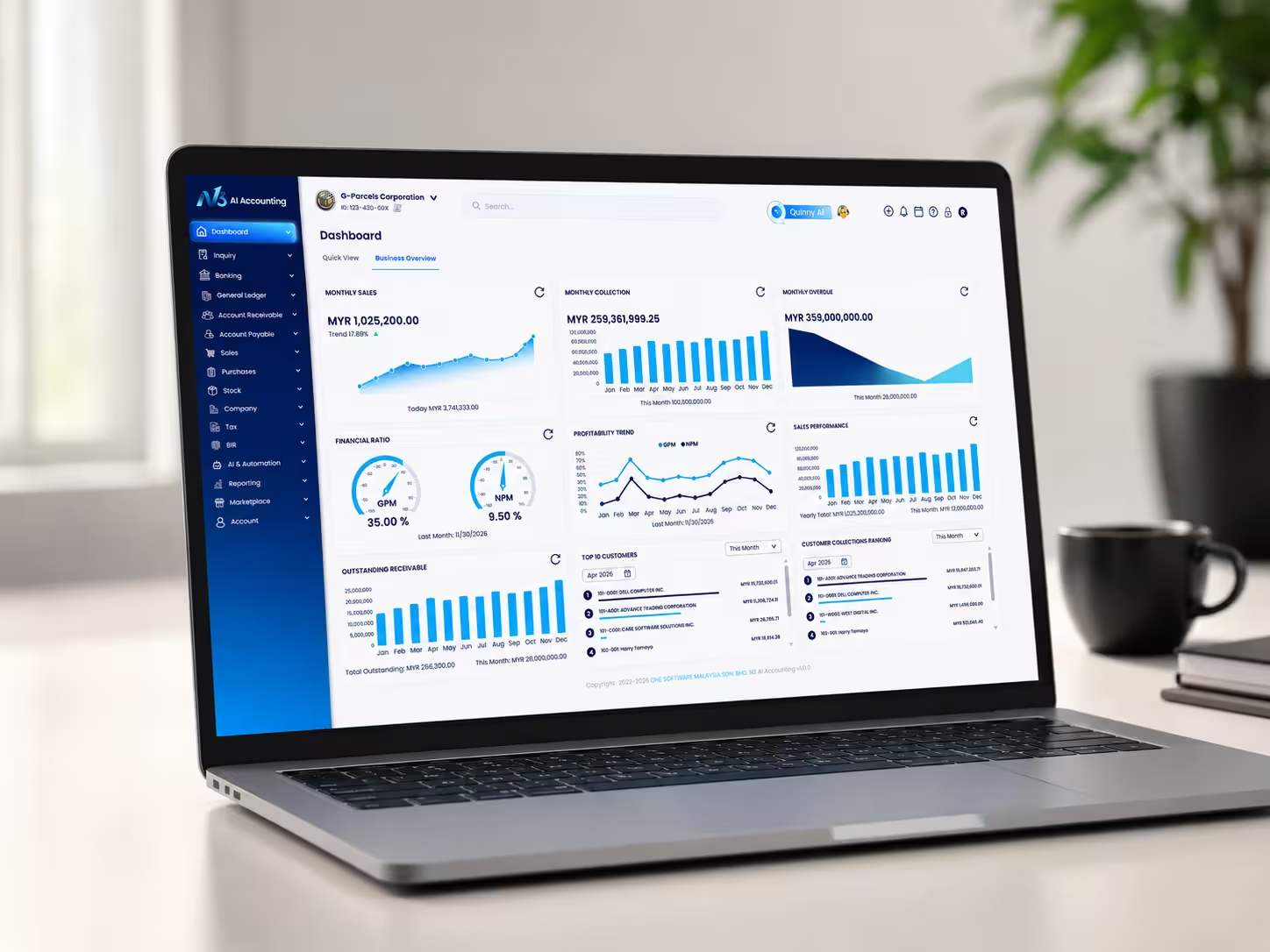
Where traditional accounting depends on a human compiling and reconciling records by hand — accurate, but only as fast as that person's schedule allows — N3 AI Accounting takes a smarter approach: it automates the routine work so information is current the moment a transaction happens.

Malaysian statutory requirements come first, with AI-assisted bookkeeping layered on top so routine data entry happens automatically instead of manually. e-Invoice submission and SST tracking are part of the core product, priced and billed in MYR, so there's no waiting on a scheduled bookkeeping session to stay compliant. It's trusted by more than 75,000 Malaysian businesses and rated 4.7/5 on Google.

Overall features
Want to learn more about QNE’s Peppol capabilities? Read about QNE as a Peppol Malaysia Solution Provider.

N3 AI Accounting vs Traditional Accounting Overview

Traditional Accounting Overview

Traditional accounting — whether it's an in-house clerk maintaining paper ledgers and spreadsheets, or an outsourced bookkeeper/accounting firm compiling the books each month — is how most Malaysian businesses have handled their finances for decades. Its real strength is human judgment: a good accountant can interpret an unusual transaction, advise on tax planning, and put a signature behind the numbers in a way software can't.

But that same reliance on a person means the process is inherently manual — documents are collected, transactions are typed in by hand, and reports are only as current as the last time the books were reviewed, which for many small businesses is monthly or even quarterly.

Typical pricing (outsourced bookkeeping/accounting services in Malaysia, in MYR)

How N3 AI Accounting Brings a Smarter Approach to Everyday Accounting

Real-time books instead of waiting for the next review

In a traditional setup, a business owner typically only sees an accurate financial picture when the bookkeeper next compiles the books — often monthly, sometimes quarterly. That's a real gap when a decision (a big purchase, a cash flow check, a loan application) can't wait. N3 AI Accounting keeps the ledger current as transactions happen, so reports and dashboards reflect today, not last month's close — a fundamentally smarter way to stay on top of the numbers.

Automated compliance instead of an added manual task

LHDN e-Invoicing and SST reporting under a traditional setup are extra administrative steps layered onto a bookkeeper's existing manual workload — still dependent on someone remembering to file, on time, every cycle. N3 AI Accounting includes native MyInvois submission and SST tracking in every plan from Prime up, so compliance runs automatically instead of competing for a bookkeeper's time.

AI-assisted data entry instead of manual typing

Traditional bookkeeping means someone — in-house or outsourced — manually types every transaction in from receipts, invoices, and bank statements, usually in a scheduled batch. Quinny AI and QuickScan let a business capture a receipt or bill by photo or WhatsApp upload and have it entered automatically, replacing that manual step with a smarter, faster one.

Local Support

Onboarding and support come from a Malaysian team, with priority and phone support included from Growth tier up.

Use Cases: Which fits your Business?

Malaysian SME that wants LHDN e-Invoice and SST handled without building it from scratch - N3 AI Accounting vs Spreadsheet

Malaysian SME that wants LHDN e-Invoice and SST handled automatically, without it riding on a bookkeeper's schedule

Better Fit: N3 AI Accounting
Why: N3 includes native MyInvois submission and SST tracking in every plan; under a traditional setup these are manual, added tasks that depend on the bookkeeper's availability.

Business that wants an audit trail, role-based access, and protection against formula or entry errors as it scales - N3 AI Accounting vs Spreadsheet

Business owner who needs to see cash flow, sales, or expenses today, not after next month's bookkeeping review

Better Fit: N3 AI Accounting
Why: N3 keeps the ledger current as transactions happen; traditional accounting typically only reflects an accurate picture once the books are next compiled.

Very small business handling minimal involvement

Very small business handling minimal involvement

Better Fit: Traditional Accounting
Why: For very low volume and an owner who'd rather hand off bookkeeping entirely, a low-cost local bookkeeper (from roughly RM150/month) with no software to learn can be the simpler choice.

Growing SME that wants to avoid hiring additional bookkeeping staff as transaction volume increases

Growing SME that wants to avoid hiring additional bookkeeping staff as transaction volume increases

Better Fit: N3 AI Accounting
Why: N3's automation absorbs higher volume without a proportional rise in manual effort; traditional bookkeeping costs typically scale up with transaction volume and headcount.

Business that has been burned by lost paperwork, delayed reports, or reconciliation errors and wants automated, real-time bank reconciliation

Business that has been burned by lost paperwork, delayed reports, or reconciliation errors and wants automated, real-time bank reconciliation

Better Fit: N3 AI Accounting
Why: N3's AI Auto-Bank Reconciliation matches transactions automatically; traditional reconciliation depends on a person doing it correctly, on schedule, by hand.

See N3 AI Accounting vs Traditional Accounting in Action

Watch how N3 AI Accounting automates MyInvois e-Invoicing, SST reporting, and receipt capture in Ringgit — in real time, without waiting on the next scheduled bookkeeping session.

N3 AI Accounting vs Traditional Accounting

Seamless migration from Spreadsheet to N3 AI Accounting

Switching from a traditional, manually-maintained set of books doesn't mean starting from zero. N3 AI Accounting's implementation team can help import existing records, including spreadsheet exports from your current bookkeeper, and map them into N3's chart of accounts and module structure during onboarding.

N3 AI Accounting supports onboarding from existing systems, including importing data from Excel or other accounting software, as part of client setup


Frequently Asked Questions (FAQs)

Does a traditional bookkeeper handle LHDN e-Invoicing for me?

They can handle e-Invoicing on your behalf, typically by preparing and submitting invoices through LHDN’s MyInvois portal as part of their bookkeeping workflow. N3 AI Accounting provides native MyInvois submission, helping businesses manage e-Invoicing within the accounting system.

N3 AI Accounting is designed to support, rather than replace, professional accounting expertise. Accountants can still provide valuable judgment for audits, tax planning, complex transactions, and other areas that require professional review, while N3 helps automate routine accounting work.

It depends on the business and the level of accounting support required. Traditional bookkeeping may have a lower upfront cost for businesses with few transactions, while software costs are generally more predictable and can automate tasks that would otherwise require manual work.

Either approach can work depending on the business’s transaction volume, budget, and accounting needs. Traditional bookkeeping can be practical when transactions are limited, while N3 AI Accounting can be a good fit for owners who want greater automation and real-time visibility from the start.

Yes. Traditional bookkeeping can scale by increasing the time, staff, or external accounting support involved. N3 AI Accounting takes a different approach by automating more routine processes as transaction volume grows, helping businesses manage their accounting workflow more efficiently.

Yes. N3 AI Accounting supports importing existing records, including spreadsheet exports, during onboarding. QNE’s implementation team can help scope the migration to ensure historical transactions and open invoices are mapped correctly into N3’s chart of accounts.

Chat on WhatsApp

QNE Software Malaysia Sdn. Bhd. is now ISO/IEC 27001:2022 Certified