

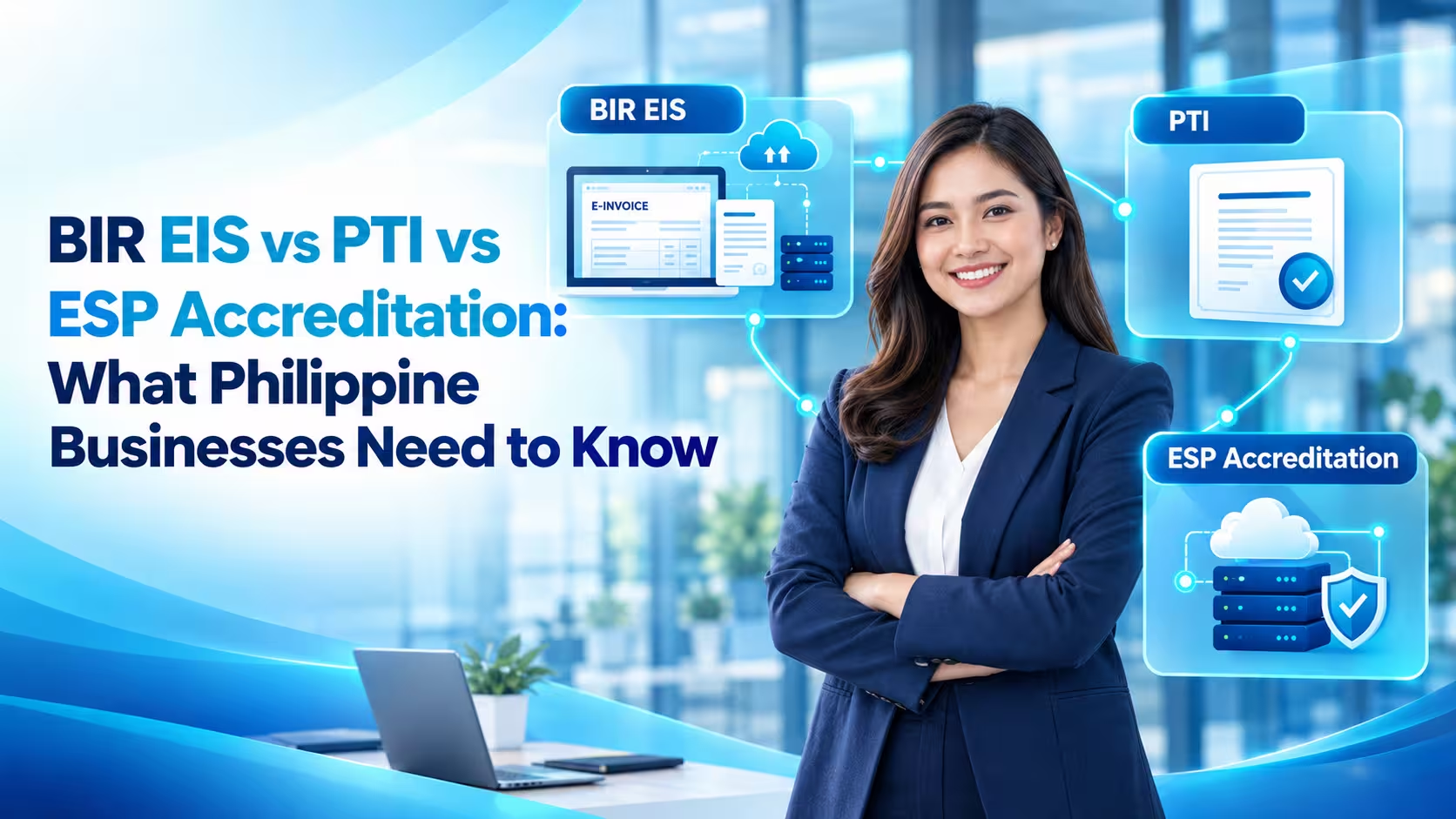
BIR EIS vs PTI vs ESP accreditation

BIR EIS vs PTI vs ESP Accreditation: What Philippine Businesses Need to Know

What Is the Difference Between BIR EIS, PTI, and ESP Accreditation?

BIR EIS Certification, PTI Electronic Invoice, and ESP Accreditation serve different purposes under the Philippines’ electronic invoicing framework. EIS Certification evaluates a taxpayer’s electronic invoicing system, PTI authorizes a taxpayer to issue electronic invoices through an identified system, and ESP Accreditation applies to eligible Electronic Invoicing Service Providers and their approved solutions.

Under Revenue Memorandum Circular (RMC) No. 98-2026, covered taxpayers must comply with the applicable electronic invoicing requirements. RMC No. 110-2026 provides guidance on ESP accreditation.

Understanding these differences helps businesses identify the requirements relevant to their invoicing setup and determine what they need to verify before issuing electronic invoices.

BIR EIS vs PTI vs ESP Accreditation: Key Differences

RequirementWhat It CoversWho It Applies To
EIS Certification Tests whether a taxpayer's electronic invoicing system can extract, process, and transmit sales data according to BIR technical standards. Taxpayers required to obtain EIS Certification for their electronic invoicing systems.
PTI Electronic Invoice Authorizes a taxpayer to issue electronic invoices through the identified, registered or approved invoicing system. Taxpayers required to secure a PTI before issuing electronic invoices.
ESP Accreditation Covers an eligible service provider and its approved electronic invoicing solution or production configuration under the applicable BIR requirements. Electronic Invoicing Service Providers (ESPs) seeking to provide covered services to taxpayers.

These requirements are related, but they are not interchangeable. A provider’s accreditation does not automatically replace a taxpayer’s PTI or EIS Certification obligations.

Explore Each BIR E-Invoicing Requirement

Each requirement addresses a different part of electronic invoicing. Explore the dedicated guides below for a more detailed explanation.

PTI Electronic Invoice

What does the taxpayer need authorization for?

A Permit to Issue (PTI) Electronic Invoice is the BIR authority allowing a taxpayer to issue electronic invoices through the identified invoicing system. Under RMC No. 98-2026, covered taxpayers must secure the applicable PTI before generating or issuing electronic invoices.

EIS Certification

What must the taxpayer's system demonstrate?

EIS Certification evaluates whether the taxpayer's electronic invoicing system can extract, process, and transmit sales data according to BIR requirements and technical standards. RMC No. 98-2026 specifies five mandatory tests, or seven tests when an API callback is used.

ESP Accreditation

What must an electronic invoicing service provider meet?

ESP Accreditation concerns eligible service providers and their electronic invoicing solutions under the applicable BIR accreditation requirements. Businesses considering an ESP should verify the provider's accreditation status and whether the approved solution covers the service being offered.

How Do These BIR Requirements Work Together?

The requirements address different responsibilities within the electronic invoicing process. The steps a business needs to follow depend on its taxpayer classification, invoicing system, and applicable BIR rules.

Businesses can use the following checklist to organize their preparation.

  1. Identify the applicable requirements. Check whether your business falls under the electronic invoicing rules and determine which requirements apply to your taxpayer category.

  2. Determine your invoicing setup. Establish whether you will use an in-house or commercially acquired invoicing system, or engage an Electronic Invoicing Service Provider.

  3. Verify the system and provider requirements. Check the applicable PTI requirements, EIS Certification process, and any ESP accreditation requirements relevant to your setup.

  4. Confirm the required approvals and deadlines. Follow the current BIR procedures and ensure that the required authorization and certification are secured within the applicable timelines.

Under RMC No. 98-2026, covered taxpayers are required to comply with the applicable electronic invoicing requirements on or before December 31, 2026, subject to the circular’s coverage and provisions. The circular also requires covered taxpayers to secure EIS Certification within six months from the issuance of their PTI Electronic Invoice.

How Can Businesses Verify an ESP's Accreditation Status?

Businesses considering an Electronic Invoicing Service Provider (ESP) should verify its accreditation status before using the solution for live taxpayer transactions.

Before proceeding, confirm the following:

Businesses should also remember that ESP accreditation does not automatically fulfill their own PTI and EIS Certification requirements. Each addresses a different part of the BIR electronic invoicing framework.

For the detailed accreditation requirements, read our guide:

Choosing an Accounting Solution for Your E-Invoicing Needs

Understanding the differences between EIS Certification, PTI Electronic Invoice, and ESP Accreditation can help your business assess its applicable requirements and invoicing setup.

QNE Software Philippines has published its CEO commitment to BIR e-invoicing readiness, outlining its commitment to preparing and enhancing its accounting solutions to support applicable BIR requirements.

Learn more about N3 E-invoicing Solution and its accounting and invoicing capabilities, or contact QNE Software Philippines to discuss your requirements.

Frequently Asked Questions About BIR EIS, PTI, and ESP Accreditation

Is PTI the same as EIS Certification?

No. PTI authorizes a taxpayer to issue electronic invoices through the identified system, while EIS Certification tests the system’s technical capability to extract, process, and transmit sales data according to BIR standards.

No. ESP accreditation concerns the provider’s covered solution, while PTI concerns the taxpayer’s authority to issue electronic invoices through the identified system. A taxpayer must still comply with its applicable PTI requirements.

No. Provider accreditation and taxpayer-level EIS Certification serve different purposes. Businesses should determine which taxpayer-level requirements apply even when they use an accredited ESP.

No. Under RMC 98-2026, a CAS Permit to Use or Acknowledgement Certificate does not, by itself, authorize electronic invoice issuance. Covered taxpayers must obtain the applicable PTI.

No. RMC 98-2026 allows taxpayers to use an in-house or commercially acquired electronic invoicing solution or avail of ESP services, subject to applicable BIR requirements. Businesses should assess their particular system arrangement and obligations.

RMC 98-2026 states that taxpayers required to obtain EIS Certification must secure it within six months from the issuance of their PTI Electronic Invoice. Businesses should confirm the applicable requirements and any subsequent BIR guidance.

Request the provider’s current BIR Electronic Invoicing Solutions Accreditation Certificate and verify that the certificate holder, solution, and approved production configuration match the service being offered.

Prepare Your Business for Electronic Invoicing

Get ready for evolving BIR e-invoicing requirements with N3 E-invoicing Solution

Related Articles

Explore more guides to help you navigate accounting, tax compliance, and e-invoicing.
More insights for your business?

IMPORTANT UPDATE

BIR RMC 98-2026

What Your Business Needs to Know About Electronic Invoicing?

The BIR has issued Revenue Memorandum Circular No. 98-2026. Find out who’s covered, what’s required, and what your business needs to prepare.

In this article, you’ll discover:

Who’s Covered

See if your business is included.

Key Requirements

Understand what you need to prepare.

How N3 AI Accounting Helps

Stay-compliant with ease.